Wind-lifted or missing shingles
Even a small area of lift can let water migrate under the shingle course. We look for broken seal strips, nail pops, and tabs that are no longer bonded.
Serving Mount Dora, Florida & surrounding areas
Mon–Fri 8am–6pm · Sat 9am–2pm
Roof Inspection · Mount Dora, Florida
Get clear answers about your roof's condition, with photos, plain-language findings, and practical next steps for repairs, maintenance, or documentation.
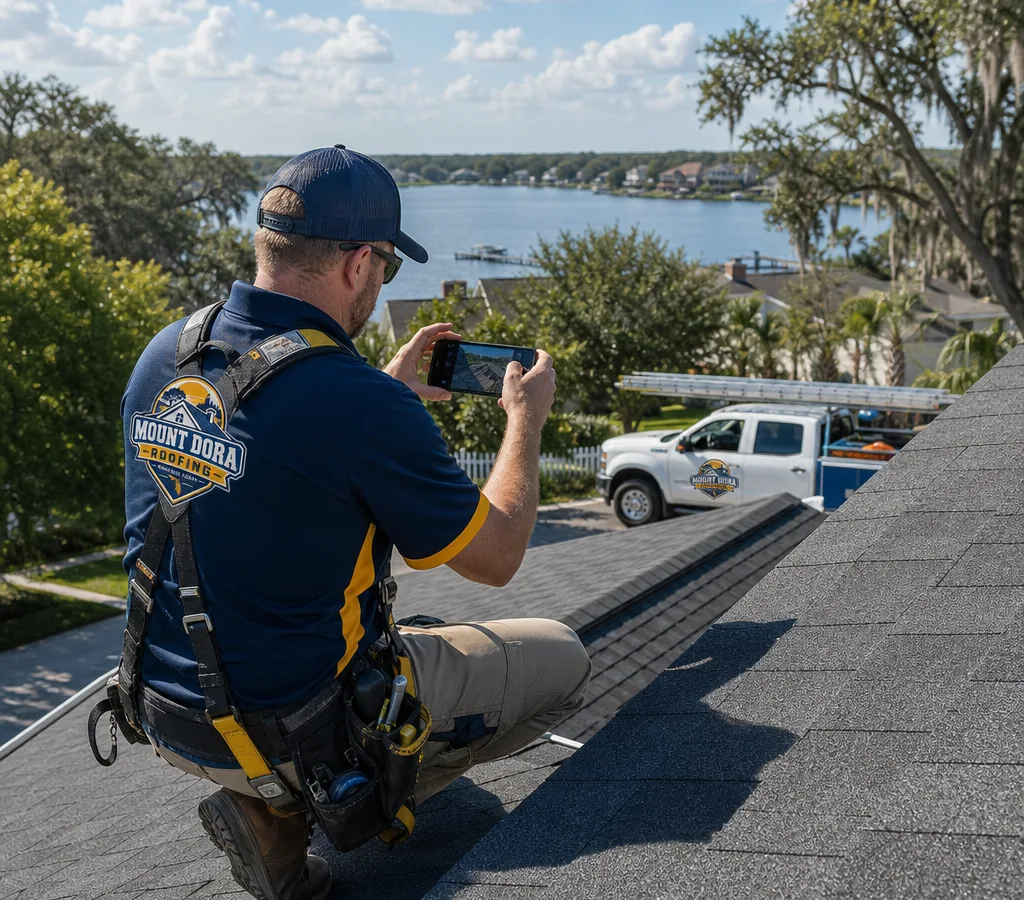
Useful answers, clearly documented
If you're searching for roof inspection Mount Dora FL, you likely want one thing: a trustworthy read on what's happening up there before a small problem becomes an expensive one.
In Central Florida, roofs deal with long stretches of UV exposure, heavy rain, and wind events that can loosen fasteners, lift shingles, and open tiny pathways for water. Those issues often start at the edges and transitions: around plumbing vents, skylights, valleys, chimneys, and wall intersections. A good inspection focuses on the places where roofs actually fail, not just a quick glance at the surface.
At Mount Dora Roofing, our inspections are designed to be useful for real decisions. You get documented findings, typically with photos, an explanation of what we saw and why it matters, and a clear plan for what to address now versus what can be monitored.
A complete roof-system review
A thorough roof inspection looks at the roof as a system. Depending on roof type, slope, and access, the inspection typically includes:
If the goal is documentation for planning or discussions with other parties, we can structure notes so they're easy to reference: where the issue is located, what material is involved, what evidence supports the finding, and whether the next step is monitoring, maintenance, repair, or further evaluation.
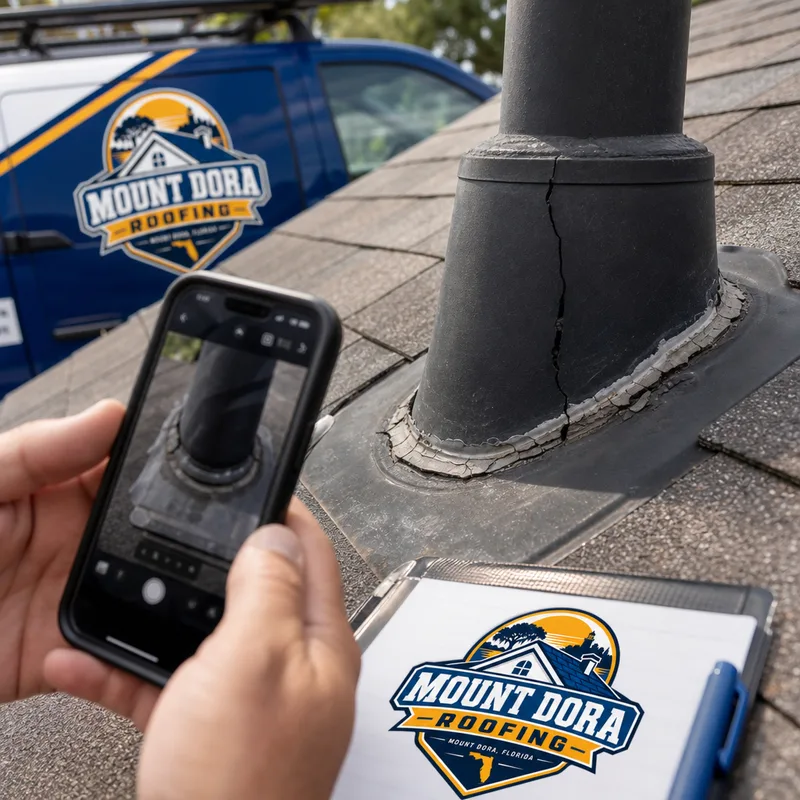
Local inspection findings
Even a small area of lift can let water migrate under the shingle course. We look for broken seal strips, nail pops, and tabs that are no longer bonded.
Rubber components can crack from sun exposure. We check the boot collar, sealant condition, and fastener points around penetrations.
Valleys move a lot of water. Accumulated leaves and grit can accelerate wear and hide damage, so we inspect both the lining and the adjacent shingle edges.
Caulk is not a long-term waterproofing plan. We flag areas where sealant has become the primary barrier instead of properly layered flashing.
A roof can look fine outside while moisture is building inside. When accessible, we check for staining, damp decking, and ventilation red flags.
Overflow at valleys, clogged gutters, or poor runoff patterns can put water where it should never sit. We connect staining patterns to likely sources.
From intake to priorities
A methodical inspection turns roof conditions into documented findings and a practical plan.
Call to Discuss Your RoofWe start by understanding your goal: peace of mind, a pre-purchase check, post-storm concerns, recurring leak symptoms, or documentation for planning repairs.
We evaluate the roof covering, edges, penetrations, and drainage paths. If safe access allows, we document specific conditions with photos so you can see exactly what we're referencing.
When the attic is accessible, we look for water staining, moisture patterns, ventilation cues, and structural indicators that help pinpoint where water may be entering.
We separate issues into categories: immediate concerns, recommended repairs, maintenance items, and watch-list areas to recheck later.
You'll leave the inspection with a clear path forward, whether that means targeted repairs, a maintenance plan, or a deeper evaluation of a specific area.
Inspection scope guidance
A roof inspection in Mount Dora covers the roof surface, edges, flashings, and penetrations, with roof size, pitch, height, access, and whether an attic evaluation and photo documentation are included shaping how the visit is carried out. More complex roofs with multiple facets, tile or metal details, or limited access take more time than straightforward, walkable shingle roofs. How detailed the report needs to be also depends on your purpose. The exact scope is confirmed based on the home and what the inspection needs to cover.
Call to Discuss Your RoofKnow when to take a closer look
You do not have to wait for an active leak to justify an inspection. The best time is when you can still choose a small repair instead of reacting to interior damage.
Consider scheduling a roof inspection if:
If you need a general company overview before you decide who to have on your property, you can start with Mount Dora Roofing and then come back to schedule the inspection that fits your situation.
Practical inspection answers
Most roof inspections take about 45 to 90 minutes, depending on roof size, pitch, height, and whether an attic evaluation is included. Homes with complex roof lines, multiple penetrations, or limited access often take longer because we document more details and confirm conditions from more than one angle.
Not always, because safety and roof condition come first. When the roof is safely walkable and access allows, walking the surface helps us verify shingle edges, flashing terminations, and soft spots. If walking is not appropriate, we can still inspect key areas from ladders, roof edges, and accessible vantage points and document conditions with photos.
Clear access to the attic hatch if you want an attic check, move vehicles away from the driveway area where a ladder may be set, and note the rooms where you have seen staining or musty odors. If you have photos from the day a leak appeared or after a storm, those can help us connect interior symptoms to exterior conditions.
Yes, and that is often the best time to catch wind-related issues early. After strong wind and heavy rain, we look for lifted shingles, damaged flashing edges, debris impact marks, and water-tracking evidence around valleys and penetrations, even when the interior still appears dry.
Yes, you should expect a clear summary of what was inspected, what was found, and what to do next, typically supported by photos of the specific areas of concern. Good documentation matters because it turns a roof inspection into something you can act on, compare, and reference later.
Yes. A useful inspection separates immediate concerns, such as active entry points or severe damage, from maintenance items and watch-list areas. You should leave with a prioritized plan that matches your goal, whether that is preventing a leak, preparing for a sale, or planning work over time.
Document your roof's condition
Tell us what you've noticed and what you need from the inspection. We'll confirm access, inspect the right areas, and provide documented findings you can use to plan next steps with confidence.