Active leaks and interior water stains
We trace the leak to the source, not the symptom. Expect a focused inspection around valleys, wall lines, penetrations, and transitions where water commonly gets in.
Serving Mount Dora, Florida & surrounding areas
Mon–Fri 8am–6pm · Sat 9am–2pm
Roof Repair · Mount Dora, Florida
Leak or storm damage? Get a clear diagnosis, a written scope, and durable repairs that match your roof type and Florida weather.
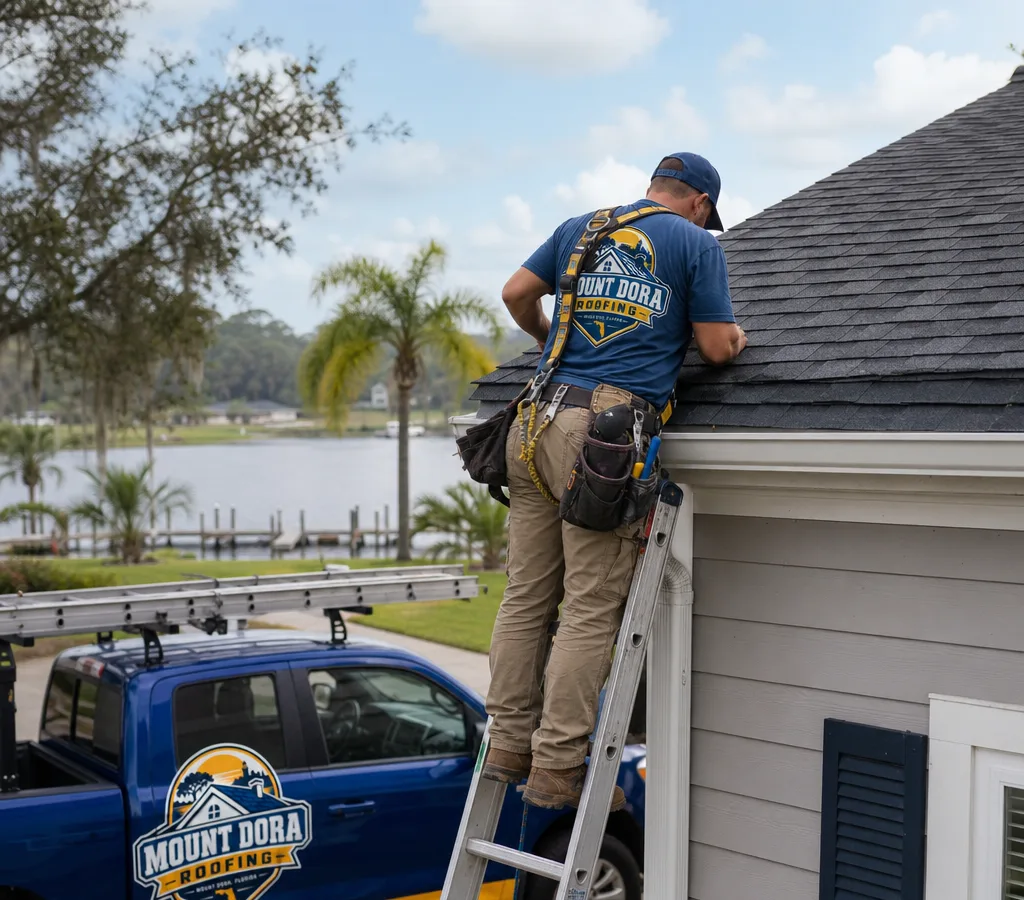
Fast, careful diagnosis
If you're searching for roof repair Mount Dora FL, you usually have a reason: active leaks, missing shingles after wind, a soft spot you noticed in the attic, or stains spreading across a ceiling. Mount Dora Roofing focuses on finding the real entry point, explaining what's happening in plain language, and repairing it the right way so the problem doesn't come back with the next downpour.
Roof leaks can travel. Water may enter high on a slope and show up several feet away at a light fixture, a valley, or a wall line. That's why a good repair starts with a methodical inspection—outside and inside when possible—then a repair plan that addresses the failure point: fasteners, flashing, sealant breakdown, lifted shingles, damaged underlayment, or a worn transition around penetrations.
Mount Dora sits in a part of Central Florida where heavy rain and wind-driven storms are a normal part of the year. Repairs that hold up here rely on correct flashing details, proper shingle fastening, compatible sealants, and replacing damaged materials rather than trying to glue everything back down. If you need broader roof work beyond repair, you can also learn what to expect from Mount Dora Roofing→ as a local team.
Targeted repair work
Every repair starts with the failure point, the surrounding roof detail, and the path water takes off the roof.
Call to Discuss Your RoofWe trace the leak to the source, not the symptom. Expect a focused inspection around valleys, wall lines, penetrations, and transitions where water commonly gets in.
We replace torn, creased, or missing shingles and resecure surrounding courses so the repair blends and resists uplift in future gusts.
Step flashing, chimney and skylight details, and drip edges are frequent failure points. Correct metal placement matters more than extra sealant.
Cracked vent boots and failing collars can leak even on newer roofs. We repair or replace with compatible components and proper sealing.
Valleys concentrate water, ridges take wind. We correct the detail, replace damaged materials, and confirm the water path sheds correctly.
If we find soft decking or compromised underlayment in a limited area, we can address it as part of the repair so the surface materials have a solid base.
Built for local roof conditions
Mount Dora has a mix of older homes near the historic district and newer construction farther out, and both can develop leaks for different reasons. Older roof systems may have layered repairs, aging flashings, or older sealants that have dried out. Newer roofs often leak because of a detail at a penetration, an improperly installed flashing, or damage after a storm.
We commonly work in and around:
No matter the neighborhood, the best repair is the one that matches how your roof is built. That means using the right materials for the roof covering, maintaining proper overlaps and water-shedding direction, and avoiding quick patches that trap water or accelerate wear.
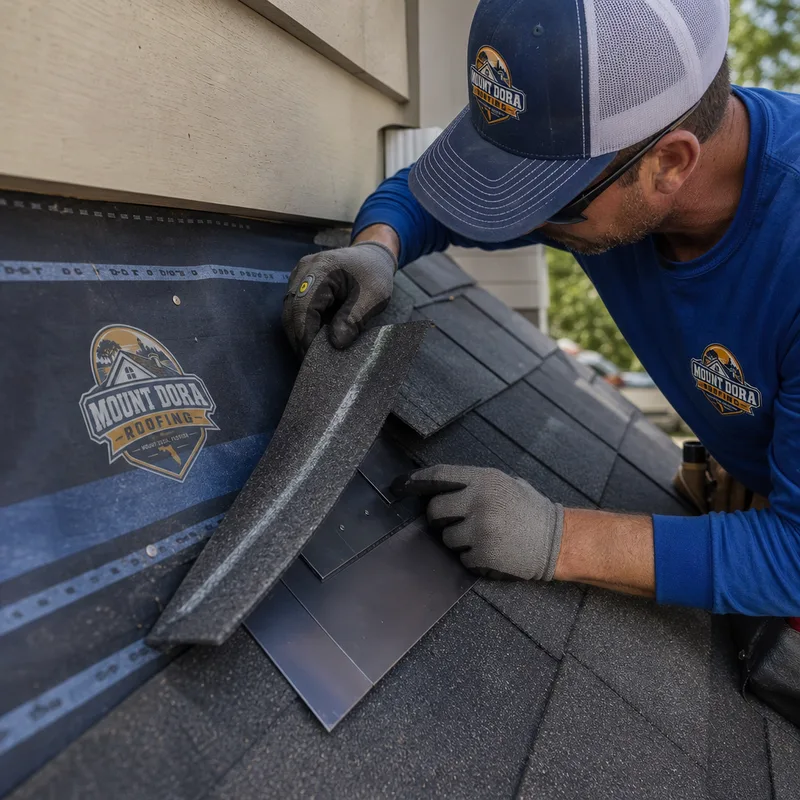
From leak tracing to cleanup
A focused process identifies the failure, documents the work, and restores the roof detail correctly.
Call to Discuss Your RoofWe look at the roof surface, edges, penetrations, and interior signs (attic access when available) to identify the most likely entry point and contributing issues.
You get a clear explanation of what failed and what the repair includes. When there are multiple valid approaches, we spell out the tradeoffs.
We replace damaged components, correct flashing details, and use sealants only where they belong—as a complement to proper overlaps, not a substitute.
We clean the work area and walk you through what was repaired, what to watch for after the next rain, and any maintenance that helps prevent repeat leaks.
Repair scope guidance
Roof repair work depends on the cause and how much material has to be removed and rebuilt. A small, straightforward repair—like a pipe boot or a few shingles—is a limited job, while flashing rebuilds, valley work, or limited decking replacement take more time and materials.
What the repair involves depends on roof type, pitch and access, how easy the leak is to trace, the amount of damaged underlayment or decking, and whether matching materials are available. The exact scope is confirmed after an on-roof inspection and a written scope.
Repair details in the field
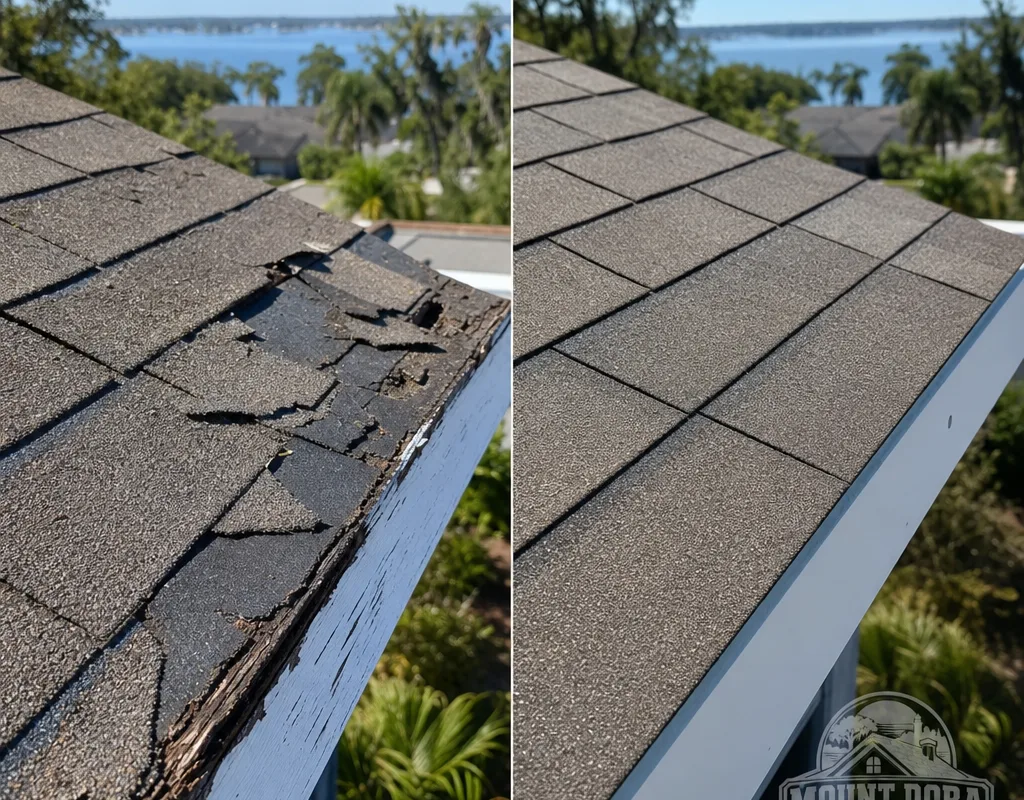
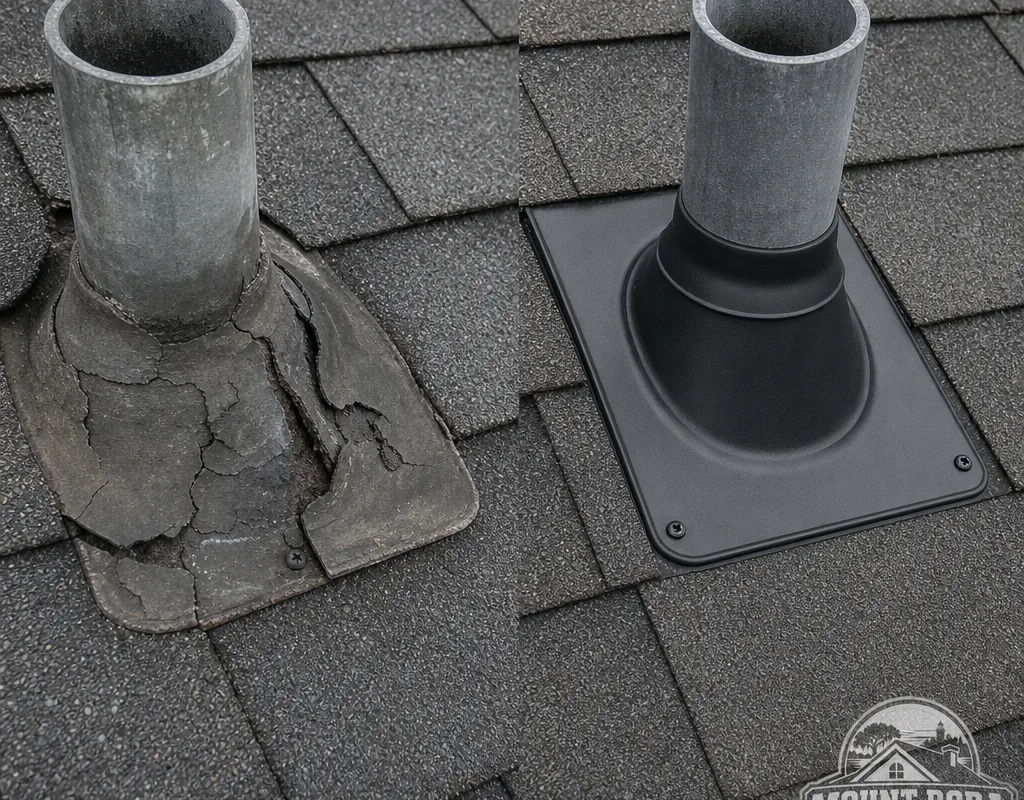
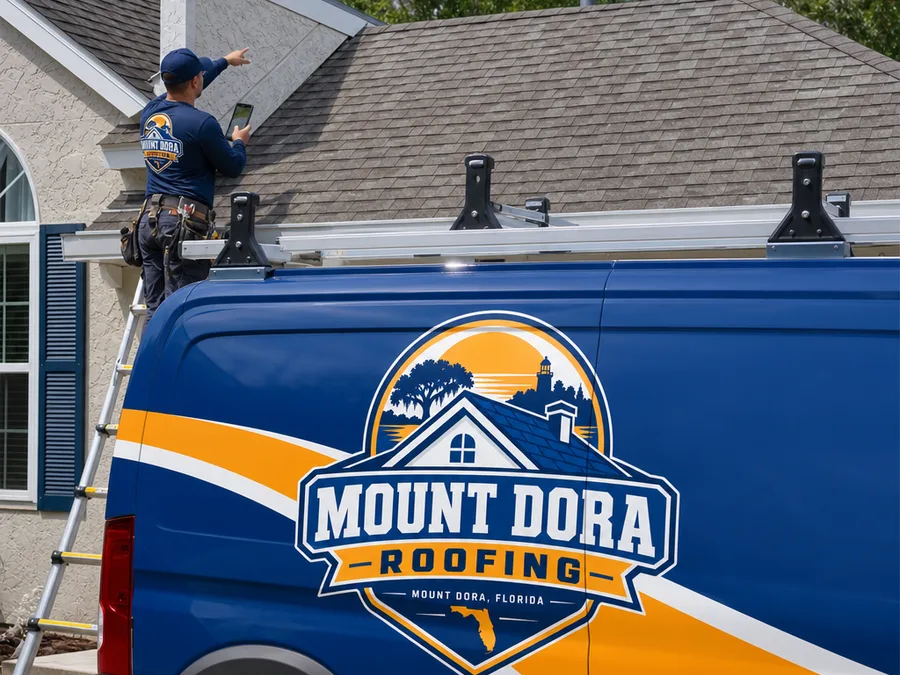
If you have an active leak or storm damage, the fastest way to protect the inside of your home is to schedule an inspection and get a written repair plan before the next round of rain.
Call Now (352) 720-2095Practical repair answers
Scheduling depends on current demand and weather, but leak situations are prioritized because water damage spreads fast in Florida humidity. If conditions are unsafe for roof access—high wind, lightning, or slick surfaces—we schedule the earliest safe window and advise on short-term steps you can take inside the home to limit damage.
Yes, many leaks are solved with a targeted repair when the roof system is otherwise serviceable. The key is confirming the leak source and rebuilding the detail correctly, especially at flashing points like wall lines, valleys, and penetrations.
Water often enters at one point and travels along underlayment, decking seams, or framing before it appears inside. That's why we treat interior stains as a clue, then verify the path on the roof by checking common entry points and the roof's drainage direction.
Yes. We replace missing or damaged shingles, secure surrounding courses, and inspect nearby areas that may have lifted fasteners or cracked seal strips. In wind-driven rain, small failures around edges and ridges can become leaks quickly, so we inspect those zones closely.
The most common causes are failed flashing details, cracked vent boots, and sealant breakdown. Repairs that last usually involve replacing the failing component or rebuilding the flashing so water sheds over metal layers, instead of relying on surface caulk alone.
The scope of a roof repair is based on access and safety setup, the time it takes to trace the leak, the amount of tear-off needed to reach the failure point, and the materials required to rebuild the detail. After inspection, you should have a written scope that states exactly what gets repaired and what is excluded.
We try to match as closely as possible, but an exact match isn't always available due to product changes and weathering. When matching is limited, we explain the options, including using the closest available match and placing replacements in less visible locations when feasible.
Move valuables away from the leak, use a bucket or plastic sheeting to protect flooring, and note when the leak happens—heavy rain, wind-driven rain, or only after long storms. Avoid climbing on the roof, especially after rain; wet shingles can be slippery and damage can worsen underfoot.
Start with a clear diagnosis
Tell us what you're seeing—leak location, recent storm, or missing shingles—and we'll schedule an inspection, confirm the cause, and provide a clear plan for a durable repair.